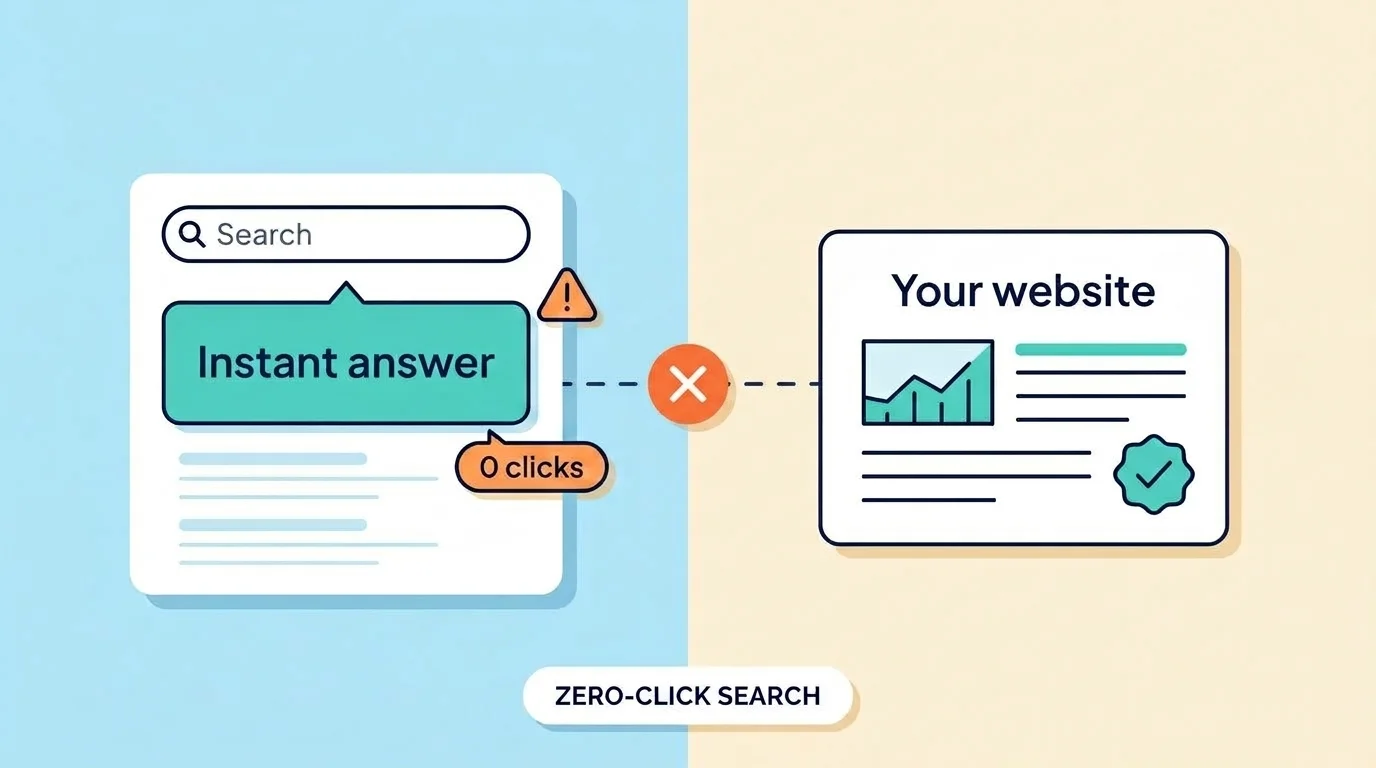
A zero-click search is simple to describe. Someone types a question into Google, reads the answer right there on the results page, and leaves. They never visit a single website.
For a business that relies on website visitors, that can feel like a quiet loss. Your page may show up in search, your ranking may look fine, and yet fewer people arrive. The reason is that Google, and now AI tools like ChatGPT, are giving answers directly instead of sending people off to find them.
This is not a reason to panic. Zero-click does not mean zero value. It changes how people find you, how they decide to trust you, and what you should measure. This guide explains what is happening in plain words, what it means for your business, and the practical steps that still work.
What Is a Zero-Click Search?
A zero-click search is any search where the person gets what they need from the results page and does not click on anything.
You have probably done this today without thinking about it. You search for the weather, the time in another country, a football score, or how many cups are in a litre. The answer shows up at the top, and you are done in two seconds.
Search engines now show answers in many forms:
- Featured snippets: short text answers pulled from a web page.
- AI summaries: written answers that combine information from several sources.
- Knowledge panels: information boxes about a person, place, or company.
- Map results: a business’s hours, phone number, and reviews, shown without a visit to its website.
- “People also ask” boxes: related questions answered in small drop-down sections.
Each of these is helpful for the person searching. The trouble is that each one can also remove the reason to visit your site.
Why Zero-Click Searches Are Rising
Zero-click searching is not new, but it is growing, and the data shows it.
| What’s Changing | The Numbers |
|---|---|
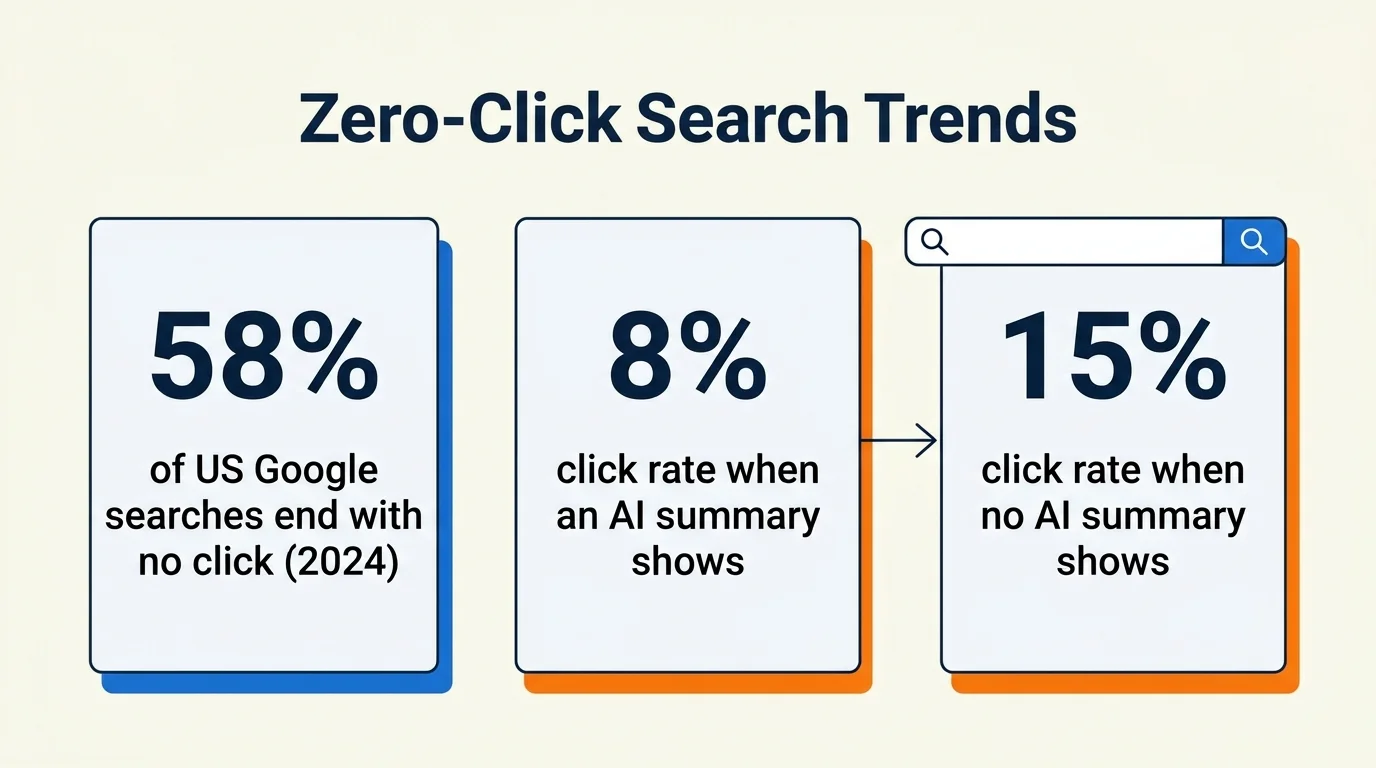
| US Google searches that end with no click | About 58 percent in 2024 (SparkToro and Datos study) |
| Clicks on a regular result when an AI summary appears | About 8 percent of visits (Pew Research) |
| Clicks on a regular result when no AI summary appears | About 15 percent of visits (Pew Research) |
Be careful with these numbers. Different studies measure different things, so read them as a general direction, not an exact score. The direction, though, is clear: more answers are being given without a click.
The Pew result is the one worth remembering. When an AI summary appeared, people clicked a regular search result about half as often as when it did not.
A few things are pushing this trend forward:
- AI summaries. Google now shows AI-written answers at the top of many results, and tools like ChatGPT and Perplexity answer questions without a normal results page at all.
- Mobile phones. On a small screen, people prefer a quick answer over opening and scrolling through a full page.
- Answers built into search pages. Search engines keep adding features that solve the question before anyone leaves the page.
- More places to search. Many people now look for answers on YouTube, TikTok, and inside AI chat apps, not just on Google.
Is Zero-Click Bad for Your Business?
The honest answer is: it depends on what your website does.
Some sites are hit harder. If most of your traffic comes from simple questions, such as definitions, quick facts, unit conversions, or basic how-to answers, a search engine can now answer those without you. Sites that earn money mainly from ad views on that kind of content feel this the most, because fewer visits means fewer ad views.
Other businesses are affected much less. If people have to visit, book, call, or buy from you to get what they want, a search summary cannot replace you. A dentist cannot be replaced by a snippet. A clothing store cannot be replaced by a paragraph.
There is also a bright side that is easy to miss. The people who still click tend to be further along in their decision. They have already read the quick answer and now want more detail, a price, or a way to take action. Fewer clicks can sometimes mean better clicks.
So zero-click is not the end of websites. It is the end of an easy kind of traffic, the kind that came from simple answers anyone could give.
What Zero-Click Means for Your Business
In practice, this changes three things.
1. Traffic and success are no longer the same thing. Your content can help someone, build trust, and get your name seen without a click. That still has value, even though your traffic report will not show it.
2. Being the answer matters. If a snippet or AI summary uses your page, people see your brand next to a helpful answer. That builds familiarity, and familiar names are the ones people search for later.
3. Your website has to offer more than basic answers. If the whole value of a page can fit into a two-line summary, that page is at risk. Pages that give real experience, tools, examples, or next steps are much harder to replace.
This is also why the way you measure results needs to change. Visits are still important, but they are no longer the full picture. We cover what else to track in the steps below.
How to Stay Visible When Clicks Drop
You cannot stop search engines from giving quick answers. You can, however, make your business easier to find, easier to trust, and harder to skip. Here are seven steps that work for small teams and solo site owners.
- Give the answer early, then add more. Put a short, clear answer in the first two or three sentences under each heading. Then go deeper with examples, steps, or warnings. This helps readers, and it makes your page easier for search engines and AI tools to understand. Our guide on why your content isn’t showing up in AI search goes into this further.
- Offer something that needs a click. A summary can describe a checklist, but it cannot be one. Calculators, templates, comparison tables, real examples, and free tools give people a real reason to visit your site.
- Write headings that match real questions. Think about how people actually ask. “How much does a website cost?” works better than a clever title nobody searches for. Add a short FAQ at the end of your posts to cover related questions.
- Keep your business details correct everywhere. If you run a local business, your Google Business Profile matters a lot. Check your hours, phone number, address, photos, and reviews. For many local searches, this is the part people see, and it is where many calls and visits begin.
- Build a name people search for. When someone types your business name directly, no summary can get in the way. Steady content, a clear style, and a good reputation all help people remember you.
- Create a direct way to reach your readers. An email list, a newsletter, or a social following lets you reach people without depending on a search engine. Even a small list is valuable because you control it.
- Track the right numbers. Look beyond visits. Check impressions and clicks in Google Search Console, searches for your brand name, phone calls, direction requests, form submissions, and sales. If those stay steady or grow while visits dip, your strategy may be working fine.
Common Mistakes Businesses Make
Most of the damage from zero-click searching comes from how businesses react to it, not from the trend itself. These are the patterns that show up most often.
- Panicking and stopping content. Fewer clicks do not mean content has stopped working. Content is still how people and AI tools learn that you exist and can be trusted.
- Writing thin answers just to get quoted. If your whole answer fits in a snippet, there is no reason to click. Give the answer, then add something extra that is worth the visit.
- Judging success by traffic alone. A page can bring in fewer visits and still lead to more calls, sign-ups, or sales. Check the results that actually matter to your business.
- Ignoring local details. An outdated phone number or wrong opening hours on a map listing can cost you customers before they ever reach your website.
- Publishing generic, copied-style content. Pages that repeat what every other site says add nothing new. Real experience, clear examples, and honest advice are what stand out.
Frequently Asked Questions
What is a zero-click search?
A zero-click search is a search where the person finds the answer on the results page and does not click on any website. Common examples include weather, sports scores, quick facts, and business hours.
Are zero-click searches bad for SEO?
Not exactly. They can reduce the number of visits, but they do not remove the value of ranking well or being quoted. Being seen in an answer can still build trust and bring people to search for your name later. The key is to track more than just visits.
Do zero-click searches affect small businesses?
Yes, but in different ways. Small blogs and information sites that rely on simple answers feel it most. Local and service businesses often benefit when people see their phone number, reviews, or directions right in the results and contact them directly.
How can I get my content shown in AI answers?
There is no guaranteed method. What helps most is clear writing, direct answers placed early on the page, honest and original information, and a site that people trust. Pages that are easy to understand are easier for AI tools to use.
Should I stop writing blog posts because of zero-click searches?
No. Blog posts still help people find you, learn from you, and trust you. What should change is the kind of content you focus on. Spend more time on helpful guides, tools, and real examples, and less on thin pages that only repeat simple facts.
How do I measure success when clicks go down?
Look at impressions in Google Search Console, searches for your brand name, phone calls, form submissions, email sign-ups, and sales. These show whether your content is still helping your business, even when raw visits dip.
Your Next Step Is to Plan for Zero-Click Search
Zero-click searching is not something you can switch off, but it is something you can plan for. Give clear answers, build things worth visiting, keep your business details accurate, and measure more than just visits.
If you want a simple place to start, review your most visited pages this week and check whether each one gives a clear answer and a reason to keep reading, so you are planning ahead instead of wondering where your traffic went.