




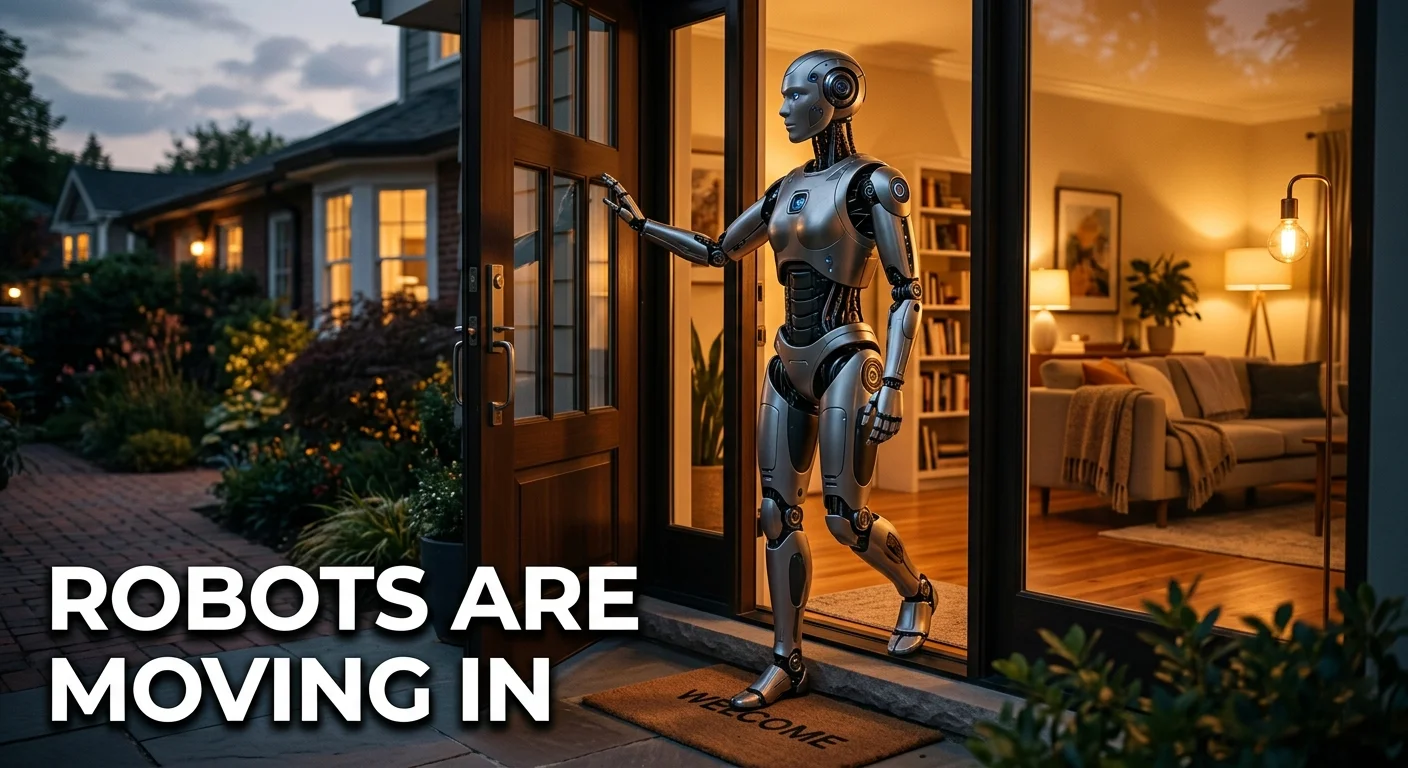
Humanoid robots are no longer a sci-fi fantasy. Right now, companies like Tesla, Figure AI, and 1X Technologies are actively deploying two-legged robots into real homes, factories, and care facilities, and the timeline to mainstream adoption is measured in years, not decades. If you assumed this was still 20 years away, the reality on the ground will genuinely surprise you.
Before we get into the speed of what is happening, it helps to be clear on what we are talking about.
A humanoid robot is a machine built to resemble and move like a human being, with two arms, two legs, a torso, and a head. Unlike industrial robots bolted to factory floors or robotic vacuums that roll around your living room, humanoid robots are designed to operate in environments built for humans. They can open doors, climb stairs, pick up objects of different shapes, and navigate cluttered spaces without needing anything about the environment to change.
That last part is what makes them genuinely different from every robot that came before. Your home was not designed for a Roomba. It was designed for you. A humanoid robot can work inside it without renovation.
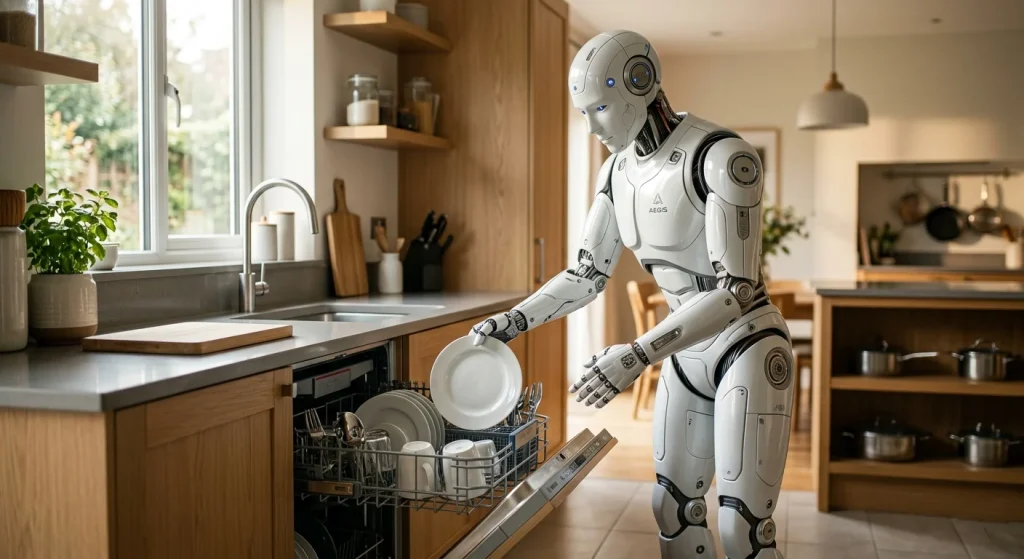
The honest answer is that three separate technologies matured at roughly the same time, and when they converged, the bottleneck disappeared.
1. AI got dramatically better at understanding physical space. Large language models taught machines to reason. But the newer wave of models trained on physical world data taught robots to understand depth, weight, texture, and consequence. A robot now knows that a glass is fragile before it touches it.
2. Battery and motor technology caught up. Early humanoid prototypes were either tethered to power supplies or ran for 20 minutes before needing a charge. Today’s robots run on compact lithium cells for several hours of active use. The hardware finally matches the ambition.
3. Manufacturing costs dropped sharply. Boston Dynamics has been building humanoid robots since the 1990s. The reason you did not have one in your home a decade ago was the cost of the earlier Atlas robot, which ran well over $150,000 per unit. Figure AI’s current pricing targets are under $20,000 per unit at scale. Tesla’s Optimus team has publicly stated a long-term goal of under $10,000. That is within the range of a used car.
This is not a speculative list of companies that might do something someday. These are active deployments happening right now.
| Company | Robot | Current Status | Home Timeline |
|---|---|---|---|
| Tesla | Optimus Gen 2 | Working in Tesla factories (2025) | Consumer pilot: 2026–2027 |
| Figure AI | Figure 02 | Deployed at BMW plants | Home beta: 2026 |
| 1X Technologies | Neo | Home testing with real families | Limited release: 2025–2026 |
| Agility Robotics | Digit | Warehouse operations (Amazon) | Residential: 2027+ |
| Unitree Robotics | H1 / G1 | Available for purchase now (~$16,000) | Currently available |
| Apptronik | Apollo | Commercial pilots underway | 2027–2028 |
1X Technologies deserves special attention here. Unlike companies that started in factories, 1X built Neo specifically for domestic use. They have been running real-world tests inside actual family homes, not labs, since late 2024. Their approach is to train the robot on ordinary household tasks by having it shadow human residents and learn from observation. The feedback from those early families is shaping how the robot behaves in its next software update.
This is where most people are genuinely surprised. The current generation is not perfect, but it is far beyond what most people imagine.
Tasks current humanoid robots can perform:
Tasks that still need work:
The gap between those two lists is closing faster than the industry expected. Most teams are reporting that capabilities double roughly every 12 to 18 months as training data accumulates.
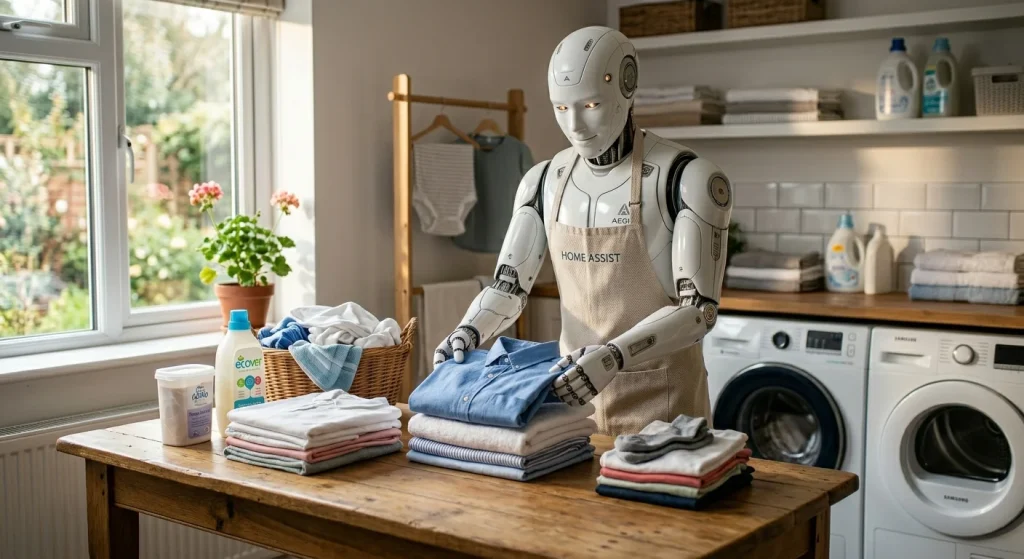
It is not wealthy tech enthusiasts. It is elderly care.
The numbers behind this are stark. By 2030, there will be more people over 65 than under 18 in most developed countries. The professional care workforce cannot scale to meet that demand; there simply are not enough trained caregivers. Humanoid robots do not replace human emotional connection, but they can handle the physical dimension of daily support that currently keeps millions of elderly people from living independently.
Think about what that actually means in practice:
These are not edge cases. These are the everyday realities of aging at home. A humanoid robot does not need to be perfect to be genuinely life-changing in this context. It needs to be reliable, safe, and present.
Japan, facing the most acute demographic pressure of any country in the world, has already begun government-subsidized trials of humanoid robots in residential care settings. The results from the first wave of those trials, published in 2025, showed meaningful reductions in fall-related incidents and significant improvements in self-reported well-being among participants.
Being honest about the obstacles matters because this is where most tech articles oversell the timeline.
Cost. The biggest barrier right now. At $16,000 to $30,000 per unit, humanoid robots are accessible to a small fraction of households. This will change it always does with hardware, but cost will remain a friction point through 2027 at minimum.
Reliability in unpredictable environments. Homes are messy. Children run through rooms. Pets knock things over. Objects end up in unexpected places. Current robots handle structured environments well, but can still be confused by genuine household chaos. This is a software problem more than a hardware problem, and it is being solved through more diverse training data.
Trust and comfort. Many people are simply not comfortable with a robot in their home, particularly one that resembles a human being. This is a legitimate psychological response, not an irrational one. Companies know this. Most current humanoid home robots deliberately soften their appearance, giving them rounder faces, warmer color palettes, and non-threatening proportions. Trust is built over time, and the families participating in current pilots tend to report dramatically increased comfort after just a few weeks.
Privacy and data. A robot that sees and hears everything in your home is collecting an enormous amount of data. The regulatory frameworks around this are still being written. This is the least technically complex barrier but potentially the most politically complicated.
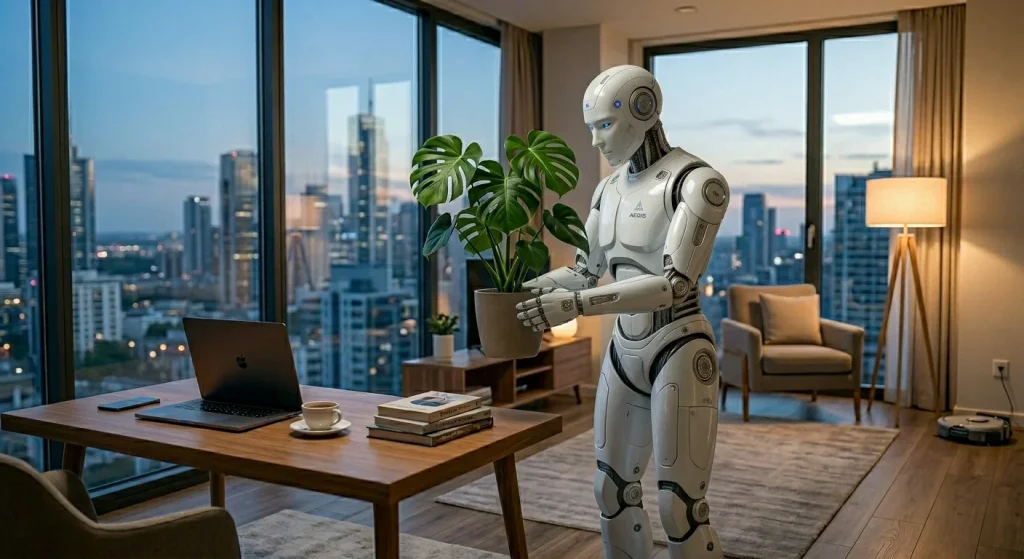
The next phase of development is not about adding new capabilities, it is about making existing capabilities reliable enough for unsupervised use. That is the threshold between “interesting technology” and “product you would trust in your home.”
Several trends are accelerating this:
The shift from factory floors to family kitchens is already underway. The question is no longer whether humanoid robots will enter your home; it is when, and whether the version that arrives will earn your trust.
Yes, in a limited sense. Unitree’s G1 robot is available for purchase today at approximately $16,000. 1X Technologies is running real home pilots with selected families. Most other major players are in factory or commercial deployment, with home consumer releases planned for 2026 to 2028.
Current generation robots are designed with force-limiting motors that prevent them from applying dangerous pressure during unintended contact. They use cameras and depth sensors to detect and avoid moving obstacles, including children and animals. That said, no company is currently marketing their robots as fully autonomous around unsupervised young children, and close oversight is still recommended.
Yes. All current consumer-facing humanoid robots integrate large language models for natural language understanding. You can speak to them in normal sentences, give multi-step instructions, and expect them to ask clarifying questions when a request is ambiguous. The interaction model is closer to a capable assistant than a voice command system.
Current models typically offer between two and five hours of active operation on a single charge. Most are designed to return to a docking station autonomously when battery levels drop, similar to a robotic vacuum. Overnight charging is the expected usage pattern for daily home tasks.
This varies significantly by company and is one of the least standardized areas of the industry right now. Most companies store operational data on secure servers to improve their models. Some offer local processing options that limit what leaves your home. Before purchasing or subscribing to any home robot service, reviewing the company’s data policy in detail is essential — particularly regarding audio and video capture inside your home.
On a long enough timeline, most industry observers believe yes. The more relevant question is the pace. A decade ago, predicting that half the world would carry a powerful computer in their pocket by 2024 sounded optimistic. The structural forces behind the humanoid robotics demographic pressure, falling hardware costs, and rapidly improving AI are at least as powerful as those that drove smartphone adoption. The next five years will tell us a great deal about how fast the curve actually bends.







Comments are off for this post.