




Your work is good. You know it. But if the right people cannot find it, see it, and feel it — none of that matters.
Talent alone does not get creative professionals hired, booked, or noticed in 2026. What gets you noticed is a portfolio that shows your work clearly, loads fast, looks sharp, and leaves the right impression within the first few seconds of someone landing on your page.
The problem is that most creatives spend years building their skills and almost no time building a proper home for those skills online. They post on Instagram, rely on a LinkedIn profile, or send PDF attachments in emails. And then they wonder why opportunities feel slow to arrive.
A portfolio website changes that. It is the one place on the internet that is entirely yours. No algorithm decides who sees it. No platform buries it. No one else is competing for attention on the same page. It is just you, your work, and whoever came looking.
This article walks through the best portfolio websites available right now and explains what makes each one the right choice for different types of creative professionals.
Before looking at the platforms, it helps to understand what has shifted.
Clients, hiring managers, and collaborators almost always search for you before they reach out. What they find in those first few seconds decides whether they keep reading or move on. A clean, professional portfolio page keeps them reading. A scattered social media profile often does not.
Posting work on social media is fine for reach. But social platforms compress images, shrink videos, and surround your work with noise. A dedicated portfolio website shows your work the way it was meant to be seen — full size, full quality, with your name attached to it.
A well-built portfolio communicates professionalism, attention to detail, and seriousness about your craft. Clients and employers notice. A portfolio that looks put-together signals that the person behind it is put-together too.
Unlike a job application or a cold email, a portfolio website is always available. Someone can discover your work at 2am on a Sunday and reach out to you by Monday morning. That passive visibility is something no other tool gives you.
These platforms are not ranked by popularity. Each one serves a different type of creative in a different way.
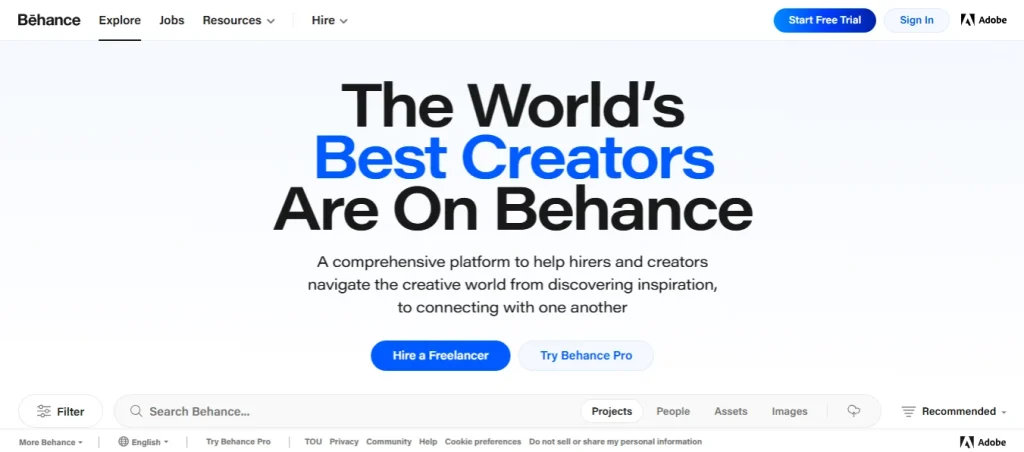
The world’s largest creative community where serious work gets serious attention
Behance is where the creative industry actually lives. Designers, photographers, illustrators, motion artists, architects, and filmmakers use Behance to share their best work and get discovered by people who are actively looking to hire or collaborate. Adobe owns the platform, which means it connects directly to tools that most creative professionals already use every day.
What makes Behance different from simply having a personal website is its built-in audience. Millions of people visit Behance specifically looking at creative work. When you post a strong project, it gets shown to people who are genuinely interested in that kind of work. That discoverability is something a personal website, no matter how beautiful, cannot replicate on its own.
Behance keeps creative professionals engaged through:
For any creative professional who wants their work seen beyond their personal network, Behance is the single most powerful free platform available.
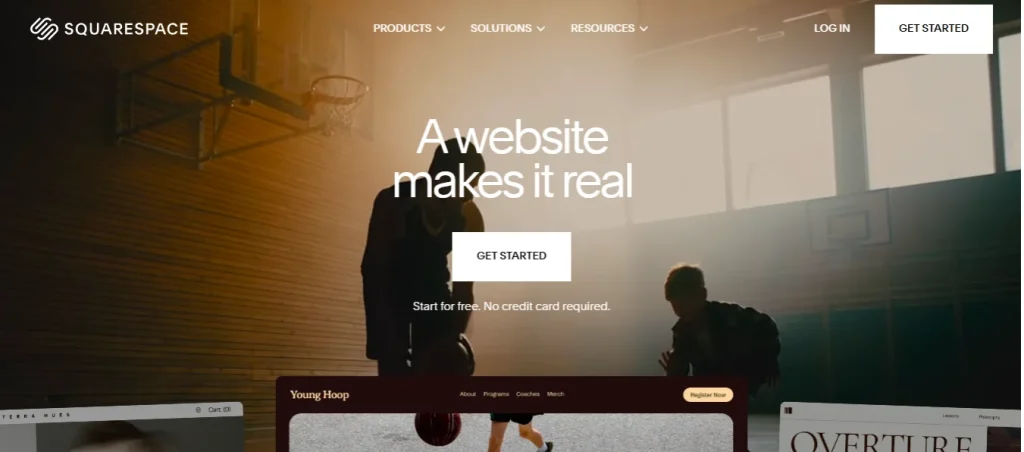
The most polished website builder for creatives who want complete control over how their work looks
Squarespace has become the go-to platform for creative professionals who want a portfolio website that feels entirely their own. Unlike platforms built for the design community specifically, Squarespace lets you build any kind of creative website you can imagine — from a photographer’s gallery site to a filmmaker’s showreel page to a writer’s editorial portfolio.
Beyond just design, it also handles the practical side of a professional online presence better than most platforms. You can add a contact form, a client booking system, a shop for selling prints or digital products, and a blog — all from the same place. For creative freelancers especially, having everything in one place simplifies the business side of being a creative professional.
Squarespace gives creative professionals:
Squarespace is not free, but for the quality it delivers, most creative professionals consider it worth every penny.
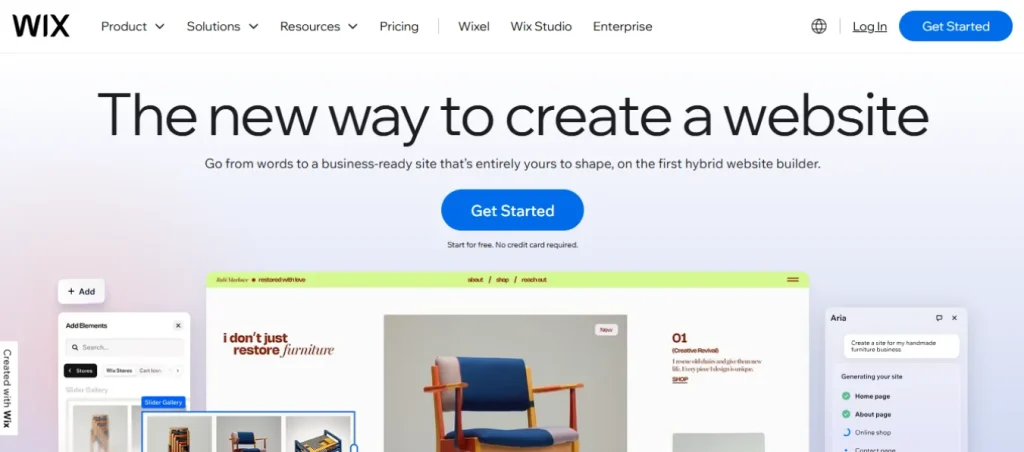
A beginner-friendly portfolio builder with AI-powered design that gets your work live fast
Wix is one of the most widely used website builders in the world, and in 2026 it has become a genuinely strong choice for creative professionals who want a polished portfolio without spending hours learning a new tool. The platform has grown far beyond basic drag-and-drop — it now uses AI to suggest complete layout options based on your work, your field, and your personal style.
What makes Wix appealing is how quickly it removes the barrier between having an idea for a portfolio and actually having one live on the internet. You answer a few simple questions, upload your work, and the platform builds a full starting point for you. From there, you adjust, rearrange, and personalize until it feels right. The whole process is faster than any other full website builder on this list.
Wix keeps creative professionals moving forward through:
For creatives who want maximum flexibility without a steep learning curve, Wix delivers more than most people expect.
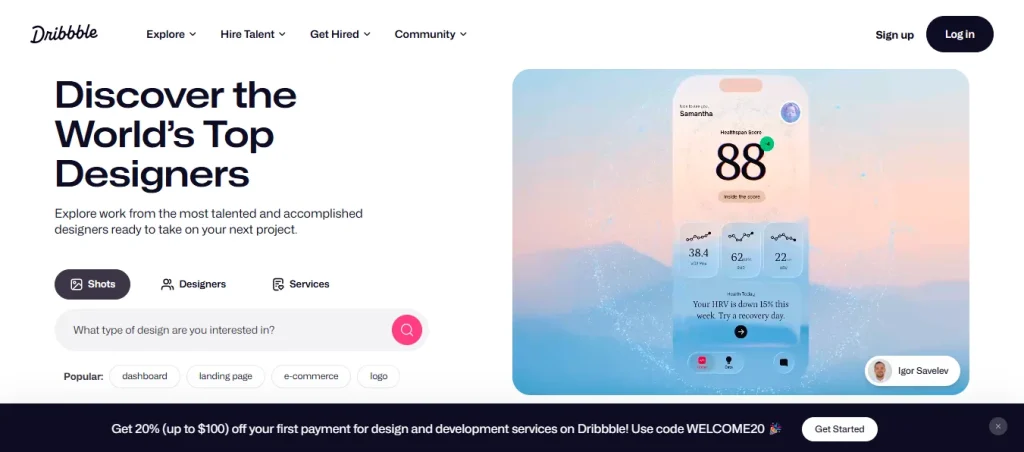
A focused community where designers share their best work and find real opportunities
Dribbble has a reputation. In the design world, being active on Dribbble signals that you take your craft seriously. The platform was originally invite-only, and while that restriction is mostly gone now, the culture of quality that it created has stayed. Work posted on Dribbble tends to be polished, intentional, and genuinely impressive.
Dribbble’s job board is one of the best in the industry. Companies looking specifically for design talent post there regularly, and many designers have found full-time roles, freelance clients, and agency contracts directly through the platform. Being active and consistent on Dribbble turns your portfolio into a living professional presence rather than a static page.
What makes Dribbble stand out for designers:
For designers specifically, no other portfolio platform offers the same combination of community respect, industry visibility, and direct hiring opportunities.
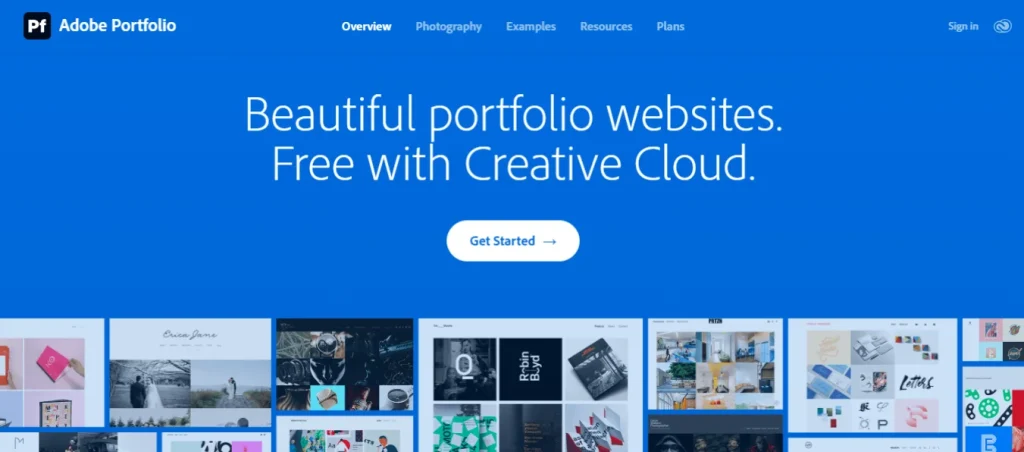
A beautifully simple portfolio builder included free with any Adobe Creative Cloud subscription
If you already use Adobe Creative Cloud — Photoshop, Illustrator, Premiere, or any other Adobe tool — then you already have Adobe Portfolio included at no extra cost. Most creative professionals do not realize this, and even fewer take advantage of it.
Adobe Portfolio is a clean, elegant website builder designed specifically for creatives who want a professional portfolio without learning to code or spending hours on settings. You choose a layout, connect your Behance projects if you have them, and your portfolio is live. The entire process takes less time than most people spend picking fonts on other platforms.
Adobe Portfolio works especially well for:
Adobe Portfolio will not give you a built-in audience the way Behance or Dribbble will. But as a personal website that looks genuinely impressive with minimal effort, it is hard to beat.
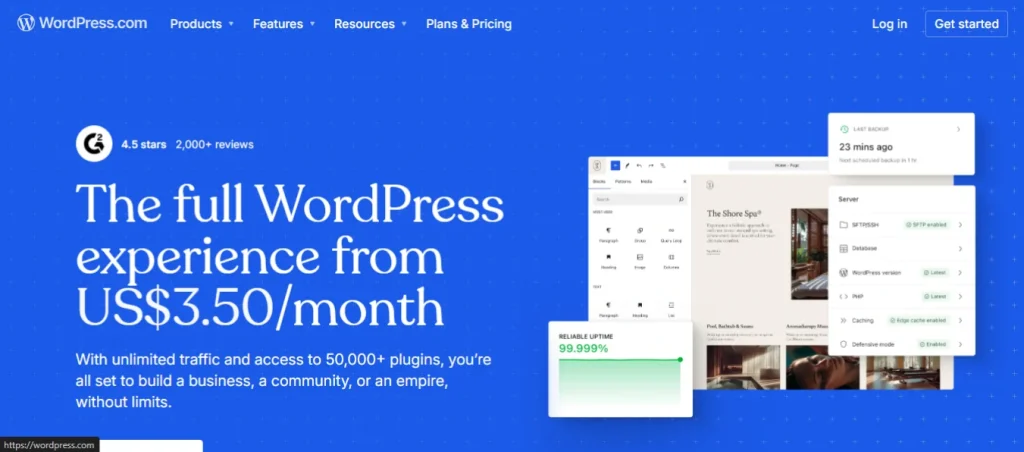
The most powerful and scalable platform for creative professionals who want total long-term control
WordPress powers more websites than any other platform on earth — and for good reason. For creative professionals who think seriously about their online presence long-term, WordPress offers a level of control, flexibility, and scalability that no other portfolio platform can match.
Unlike template-driven builders, WordPress lets you control every aspect of how your portfolio looks, functions, and grows over time. You can start with a clean, beautiful theme built for creative work and expand it as your career develops — adding a blog, a shop, a booking system, client case studies, or anything else without ever needing to move platforms.
WordPress supports creative professionals through:
WordPress has a slightly steeper starting point than simpler builders. But for creative professionals who invest a little time upfront, the long-term payoff in control and visibility is unmatched.
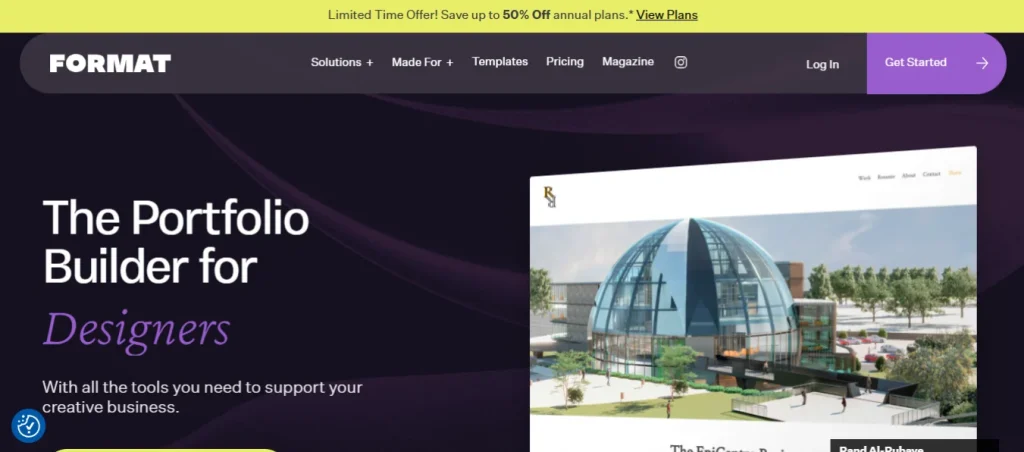
A dedicated portfolio platform built specifically for photographers and visual artists
Format is built from the ground up for one purpose: helping photographers, illustrators, and visual artists present their work in the cleanest, most professional way possible. Unlike general website builders that try to serve everyone, Format stays focused on visual creatives and it shows in every detail of how the platform works.
Format also takes the business side of creative work seriously. Freelance photographers can use the platform to send client proofing galleries, collect approvals, and deliver final files — all within the same website that serves as their public portfolio. That combination of public showcase and private client tool makes Format more useful than a portfolio builder alone.
Format keeps creative professionals productive through:
For photographers especially, Format offers more purpose-built features than any other platform on this list.
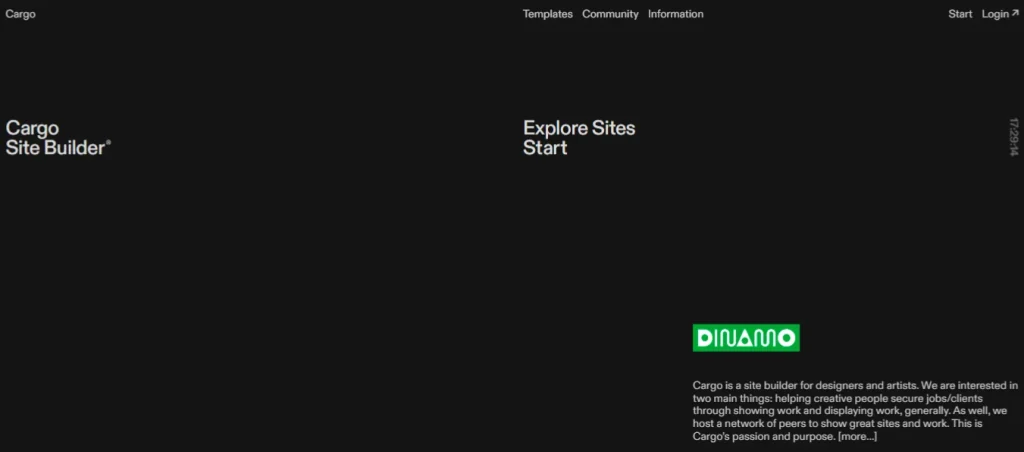
A portfolio platform built for creatives who refuse to look like everyone else
Most portfolio websites end up looking similar. Clean white background, grid of images, name at the top. That look is professional, but it is also everywhere. Cargo exists for the creative professionals who want their website to feel as distinctive as their work.
Cargo is a portfolio builder that gives you genuine creative freedom over your layout in a way that most drag-and-drop website builders do not. You can overlap elements, break grids, create unusual scrolling experiences, and build something that feels genuinely different. The platform attracts artists, photographers, art directors, and experimental designers who see their portfolio as a creative statement in itself, not just a place to store work.
Cargo is a strong fit for creatives who:
Cargo requires more time and thought than simpler platforms. But for creatives who see that as an opportunity rather than a burden, the results are unlike anything else available.
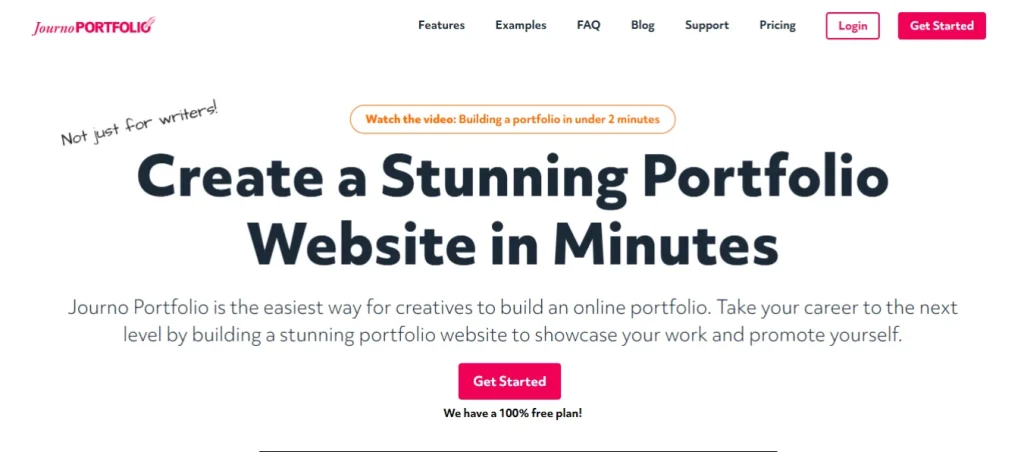
A clean, purpose-built portfolio platform for writers, journalists, and content creators
Most portfolio platforms are built with visual work in mind — images, videos, design projects. Journo Portfolio is built specifically for people whose work lives in words. Writers, journalists, content strategists, editors, and copywriters finally have a platform that understands what their portfolio actually needs to do.
Instead of forcing written work into an image-heavy grid layout, Journo Portfolio presents articles, essays, and writing samples in a clean, readable format. You can pull published work directly from external URLs, organize pieces by topic or publication, and present your writing history in a way that feels professional and easy to browse. Clients and editors land on your portfolio and immediately understand who you are and what you write.
Journo Portfolio works especially well for:
For writers especially, Journo Portfolio fills a gap that almost every other platform on this list leaves open.
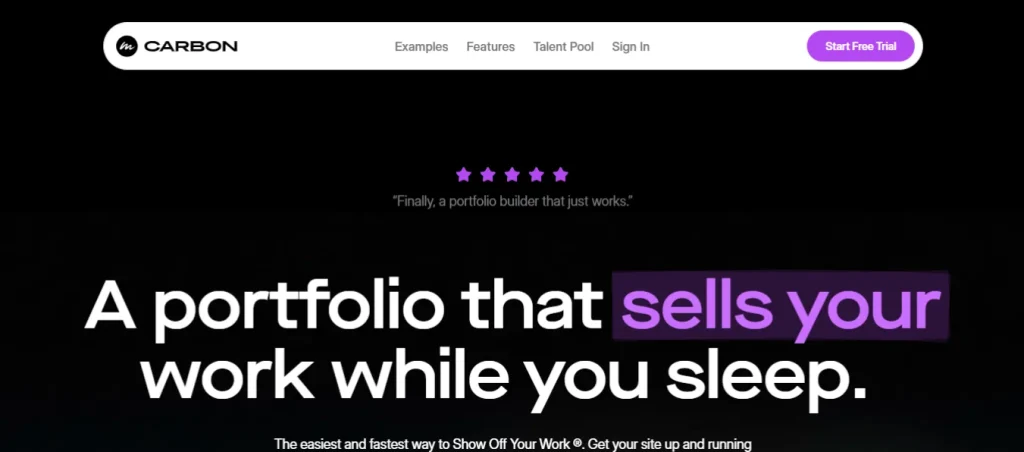
A dedicated portfolio platform built for designers and illustrators who want beautiful results fast
Carbonmade has been quietly serving the creative community for years. Unlike general website builders that try to serve everyone, Carbonmade is built with one clear purpose — helping designers, illustrators, and visual artists put their work online in a way that looks genuinely impressive without spending hours on setup.
The platform is simple by design. You upload your work, choose a clean layout, and your portfolio is live. There are no complicated settings to figure out, no coding required, and no decisions that slow you down. The entire experience is built around getting your work in front of people as quickly and beautifully as possible.
Carbonmade works especially well for:
Carbonmade proves that a portfolio platform does not need to do everything to do its one job really well. For visual creatives who want simplicity without compromise, it remains one of the most focused and reliable options available.
These ten platforms could not look more different. One is a massive creative community. Another is a flexible document tool. One is built for photographers specifically. Another hands you total visual freedom. But they all support the same outcome: getting your work seen by the right people in the right way.
The best portfolio websites share a few things regardless of which platform they are built on:
Your skills took years to develop. They deserve more than a folder on your desktop or a few posts buried in a social media feed.
A portfolio website is not a luxury for established professionals. It is the foundation every creative person needs, whether you are just starting out or have been working in your field for decades. It is the place where your work lives permanently, where your name means something, and where opportunities find you instead of the other way around.
The right platform is the one that matches how you work, what you create, and how you want to be seen. Pick the one that feels right, put your best work in it, and let it do what a good portfolio is supposed to do — open doors you did not even know were there.




Comments are off for this post.