

School was never the only place to learn. But in 2026, it’s not even the best place for millions of people around the world.
Something big is happening quietly online. People are picking up new skills during lunch breaks. Working parents are learning to code after putting their kids to bed. Teenagers in small towns are studying subjects their local schools never offered. And none of them are sitting in a classroom.
The internet has always had free information. But the best learning websites today do something different. They do not just give you information. They help you understand it, practice it, and actually remember it. That is a completely different experience.
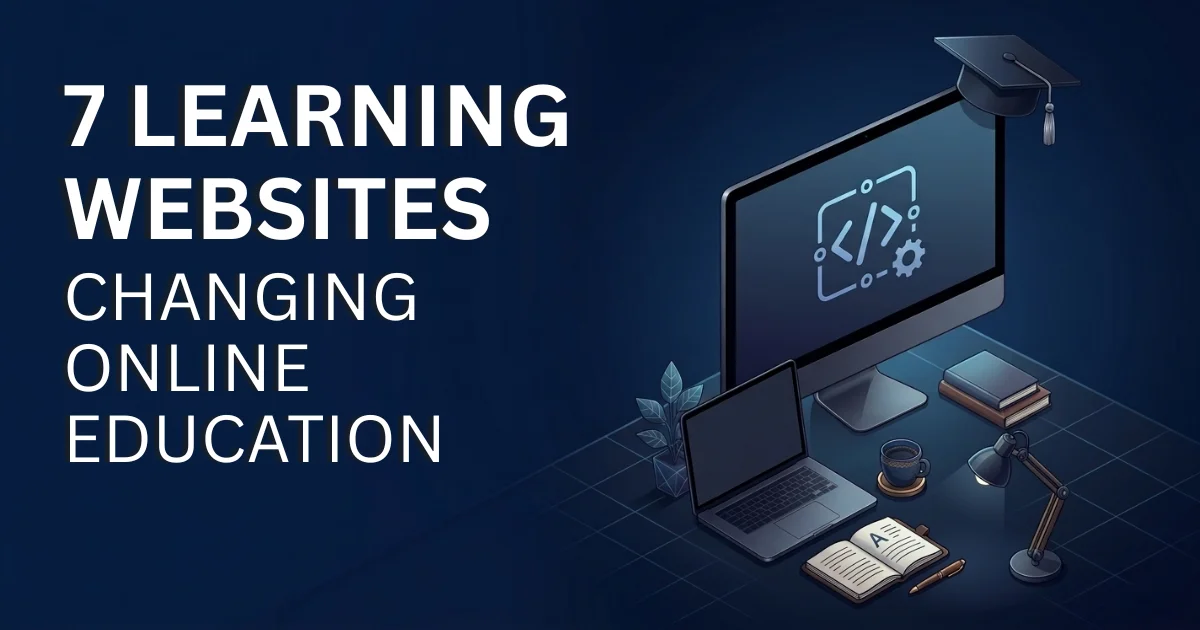
Here we explore 7 learning websites that are changing how people grow their knowledge in 2026, and why these platforms feel so different from anything that came before.
Before jumping into the websites, it helps to understand what has actually changed.
Old online courses gave everyone the same videos in the same order. Modern learning websites watch how you study and adjust to your pace, your weak spots, and your goals. The experience feels made for you because, in many ways, it actually is.
Watching a video about cooking does not teach you to cook. The best learning websites today understand that doing is how real learning happens. They build exercises, projects, and challenges directly into the experience so you are always applying what you just learned.
Employers used to ignore online certificates. That is changing. In 2026, many companies actively look for skills from specific online platforms because they trust the quality of what those platforms teach.
Unlike college courses with fixed deadlines, the best modern platforms let you learn on your own time without losing progress. This makes education accessible to people with jobs, families, and unpredictable lives.
These are not just popular platforms. Each one is changing something specific about how people learn.
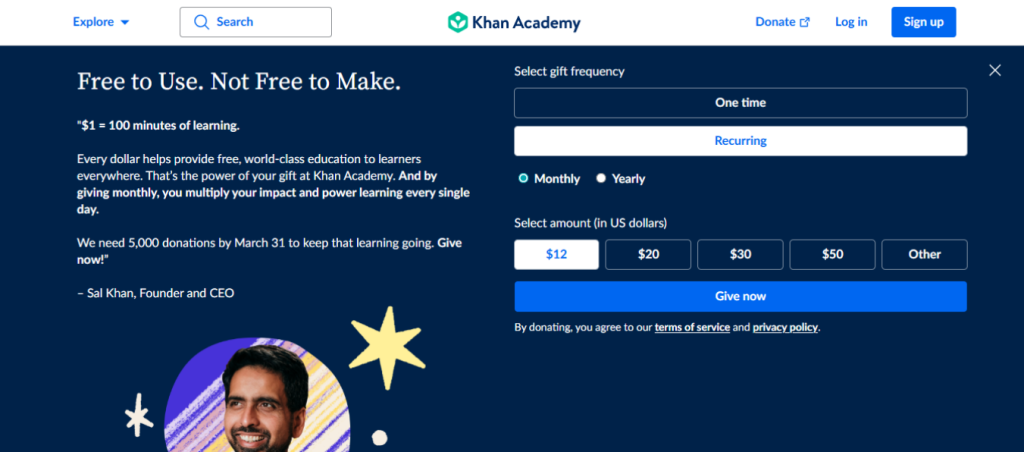
Free, world-class education for anyone, anywhere — no exceptions
Khan Academy has been around for years, but in 2026 it feels more powerful than ever. The platform covers everything from basic math for young children to advanced subjects like economics, biology, computer science, and SAT preparation. All of it is completely free. Not free with a catch. Just free.
What makes Khan Academy different from most platforms is how it treats mastery. Instead of pushing you forward after watching a video, it gives you practice questions and only moves you ahead when you actually understand the material. If you get something wrong, it explains why and gives you another chance. This creates genuine understanding rather than surface-level exposure.
The platform recently improved its AI-powered tutor called Khanmigo, which acts like a personal teacher inside the website. Instead of just giving you answers, it asks you questions to help you think through problems yourself. That style of teaching produces real learning.
Khan Academy keeps learners engaged through:
Whether you are a student filling knowledge gaps, an adult revisiting forgotten subjects, or a parent helping your child learn, Khan Academy gives you a complete education without asking for anything in return. That alone makes it unlike almost everything else on this list.
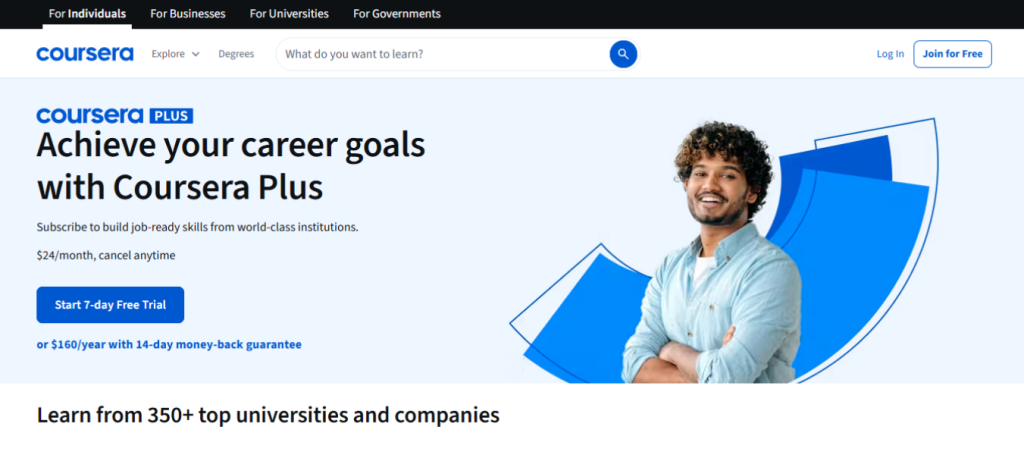
Real university courses and professional certificates from the world’s top institutions
Coursera connects learners directly with universities and companies like Google, Stanford, Yale, IBM, and Michigan. Instead of random internet lessons, you are studying material built by the same teams that teach on actual campuses. The difference in quality is noticeable from the first lesson.
What makes Coursera especially valuable in 2026 is its professional certificate programs. These are short, focused courses designed to prepare you for specific jobs, such as data analyst, UX designer, project manager, or cybersecurity specialist. Many of these programs were built in direct partnership with employers, meaning the skills you learn are exactly what those companies want to see.
Most courses are video-based with quizzes, assignments, and peer reviews built in. The structure keeps you accountable without being rigid. You can move through material as fast or as slow as your schedule allows, and your progress is always saved.
What makes Coursera stand out:
Coursera is not the cheapest option on this list, but for people who want credentials that carry real weight, it is one of the most reliable places to invest in learning.
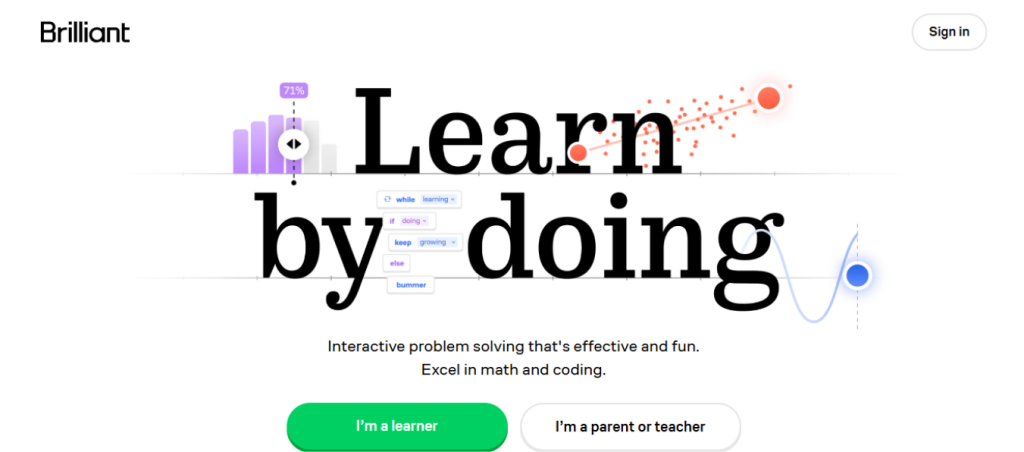
Hands-on problem-solving for math, science, and computer science
Most people learn math by watching someone else solve problems. Brilliant flips that completely. Instead of lectures, it drops you directly into problems and guides you through thinking them out. This approach sounds simple, but it changes everything about how the material sticks.
Brilliant covers topics like mathematics, physics, data science, logic, computer science, and programming. The lessons are built around interactive challenges where you drag, click, and build answers rather than passively reading or watching. Every concept is introduced through a problem that makes you curious before it gives you the explanation. That curiosity is what makes the learning feel alive.
The platform works exceptionally well for visual learners and for people who struggled with math or science in school because of how it was taught, not because the subjects are too hard. Brilliant strips away the dry formulas and replaces them with stories, puzzles, and real-world examples that make abstract ideas feel surprisingly logical.
Brilliant keeps learners coming back through:
If you have ever felt like math or science just was not for you, Brilliant is the platform most likely to change your mind.
The most popular language learning app in the world, rebuilt for real fluency
Duolingo has more active learners than any language school on earth. In 2026, it had grown well beyond its original game-like format into a structured language learning system that genuinely works for building everyday fluency in dozens of languages.
The platform teaches by mixing reading, listening, speaking, and writing into short daily lessons that feel more like games than study sessions. Streak systems, friendly competitions, and character-driven stories keep motivation surprisingly high even on days when the last thing you want to do is study. That consistency is what separates people who actually learn a language from people who give up after two weeks.
What Duolingo has improved most recently is its approach to real conversation. Instead of just translating sentences, newer courses push you to build sentences from scratch, respond to audio clips, and practice speaking out loud. The gap between Duolingo and actual conversation is narrower than it has ever been.
What makes Duolingo a genuinely useful platform:
For anyone who has wanted to learn another language but never found a method that stuck, Duolingo makes the habit easier to build than almost anything else available today.
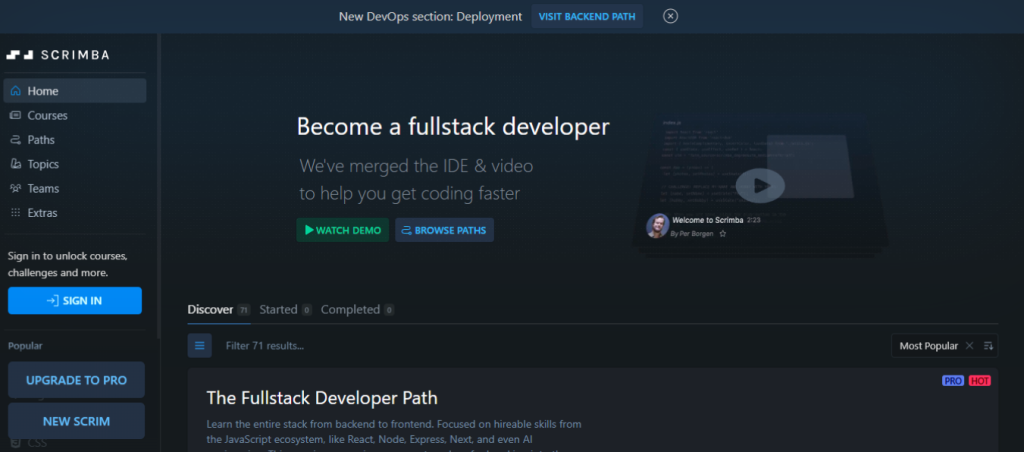
An interactive coding platform where you learn by writing real code inside every single lesson
Most coding courses have a gap that nobody talks about. You watch someone build something, feel like you understood it, and then open your own code editor to try it yourself — and suddenly nothing works. That gap between watching and doing is where most beginners lose confidence and give up.
Scrimba was built to close that gap completely.
Instead of watching a video and then switching to a separate window to practice, Scrimba lets you write code directly inside the lesson itself. The instructor is talking, the code is on your screen, and you can pause at any moment, edit the code, run it, and see what happens. The lesson becomes a live playground rather than something you watch and try to remember later.
Scrimba focuses primarily on front-end development — HTML, CSS, JavaScript, React, and TypeScript — which makes it one of the most focused and complete platforms for anyone who wants to build websites and web applications professionally. The courses are structured, project-based, and taught by instructors who work in the industry every day.
Scrimba keeps learners moving forward through:
For anyone who has tried learning to code before and felt like the knowledge never quite landed, Scrimba’s hands-on format is often the thing that finally makes it click.

Professional skills training that connects directly to the career opportunities waiting for you
Most learning platforms exist in their own world. You finish a course, earn a certificate, and then figure out on your own how to turn that into something real. LinkedIn Learning does something none of the others can — it connects what you learn directly to the professional world where those skills actually matter.
Because LinkedIn Learning lives inside the same platform where recruiters search for candidates, hiring managers browse profiles, and professionals build their careers, the distance between learning a skill and being found for that skill is shorter here than anywhere else. When you complete a course, the certificate appears on your LinkedIn profile automatically. People looking for someone with exactly that skill can find you.
The course library covers an enormous range of professional topics — leadership, project management, Excel, Python, public speaking, marketing, finance, UX design, and hundreds more. The instructors are working professionals and industry practitioners, not academics. Their lessons feel practical and grounded because they are drawn from real experience, not theory.
What makes LinkedIn Learning genuinely useful for professionals:
LinkedIn Learning does not just teach you skills. It places those skills exactly where the people who are hiring for them will see them. That combination of learning and visibility is something no other platform on this list can offer.
Real university education from the world’s most respected institutions, available to anyone online
edX was built on the belief that world-class education should not be locked behind campus gates or tuition fees that most people cannot afford. Harvard, MIT, Berkeley, and hundreds of other leading universities have put their actual course material on edX so that anyone with an internet connection can access the same quality of education their enrolled students receive.
That is not a small thing. It is genuinely remarkable.
Unlike platforms that hire instructors to create original content, edX courses are built and delivered by the same professors who teach on campus. The syllabus, the readings, the assignments, and the exams are real. When you complete an edX course, you have gone through material that university students paid thousands of dollars to access.
What makes edX especially powerful in 2026 is its MicroMasters and Professional Certificate programs. These are not single courses — they are structured, multi-course paths designed to take you from foundational knowledge to job-ready competence in fields like data science, business analytics, computer science, and supply chain management. Many of these programs are recognized by employers and even transferable as credit toward full degrees at partner universities.
What makes edX stand out:
edX does not feel like an online course platform. It feels like a university that finally decided to open its doors to everyone.
These seven websites could not look more different on the surface. One teaches language through games. Another puts you inside a kitchen with a world-famous chef. One helps kids master multiplication. Another turns you into a developer with no prior experience.
But they all share something important:
The best classroom in 2026 is not a room with four walls. It is a screen, a quiet hour, and a website that actually cares about helping you grow.
These platforms are not replacing traditional education entirely. But they are filling gaps that traditional education never could. They serve the curious adult who has always wanted to understand something better. The career changer who needs practical skills fast. The student who needs a different explanation than the one their teacher gave.
Learning has never been more open, more flexible, or more human than it is right now. You just need to know where to look. The right website, matched to the right goal, can change the direction of your entire life — and it is closer than most people realize.




Comments are off for this post.